The work of legendary New Orleans pianist/composer/producer Allen Toussaint is celebrated today on WWOZ-FM.
Here's the scoop...
WWOZ 90.7 FM New Orleans is celebrating Allen Toussaint on what would've been his 88th birthday by digging deep into the archives on Wednesday, January 14! Tune in all afternoon to hear rare and never-before-rebroadcast recordings honoring one of New Orleans’ greatest musical minds.
At 1pm CT, Missy Bowen will kick things off with a rarely-heard performance by Allen and his band at WWOZ's Piano Night concert in 2005.
At 2pm CT, hear an amazing interview from the vaults: in 1986, Allen Toussaint stopped by the radio show of the late Billy Delle, when WWOZ was located in Armstrong Park, for a wide-ranging conversation covering Allen's career up to that point. This recording was made available to the Archive of the Jazz & Heritage Foundation by AJ Rodrigue and Marlene Delle, and was then digitized courtesy of the American Archive of Public Broadcasting. It has never been aired on WWOZ since that evening in 1986.
At 3pm CT, we'll switch gears with another super-rare recording: Allen Toussaint's Jazzity Project, recorded in the Jazz Tent at Jazz Fest in 2010, which takes us until 4pm and the start of "Jazz from Jax Brewery."
At 5pm CT, hear WWOZ's two-part tribute to Allen Toussaint, which originally aired in 2016 on WWOZ's syndicated program "New Orleans Calling," hosted and produced by George Ingmire. Part One, "Say Yes To Music," begins at 5 pm, and Part Two, "Last Train," begins at 6 pm.
This tribute features the voices of Irma Thomas, Leo Nocentelli, George Porter Jr, Sarah Dash of LaBelle, Dr. Ike of the Ponderosa Stomp, and Allen himself from archival interviews, plus lots of Allen's music!
These recordings all appear on WWOZ courtesy the Archive of the New Orleans Jazz & Heritage Foundation.
Tune in and spend the afternoon celebrating the legacy of Allen Toussaint with us! Listen locally at 90.7 FM or from anywhere at wwoz.org. The entire afternoon will also be available after-the-fact on our 2-week archive.
Watch a couple of Allen Toussaint's performances and recordings below including the overlooked gem "Mind Over Matter" from Hamilton's own Richard Newell aka "King Biscuit Boy" written, arranged and produced by Allen Toussaint in 1974.
Allen Toussaint's soundtrack for the 1974 film Black Samson is way overdue for proper release.
Allen Toussaint's "lost" Black Samson OST
Take a cursory scan through Allen Toussaint's discography and you'll notice there's an unusual three-year gap between his Reprise albums, Life, Love and Faith from 1972 and Southern Nights released in 1975. Having just knocked out two successful albums with The Band – 1971's Cahoots and 1972's Rock of Ages, Toussaint's solo career was beginning to take off. In the first quarter of 1973, The Pointer Sisters' cover of his "Yes We Can Can" zooming up the charts and his production of Dr. John's single "Right Place, Wrong Time" was shaping up to be a massive summer hit, clearly this was no time for a ski trip to the Alps or a cycling jaunt through the Burgundy region of France.
From the moment he finished work on Dr. John's In The Right Place album at Criteria in Miami during the latter part of 1972, Toussaint was busy setting up his own recording operation, Sea-Saint Studio, on the east side of New Orleans in the Gentilly neighbourhood. He'd cut a fantastically funky session with Crowbar's harp-honker Richard "King Biscuit Boy" Newell from Hamilton, Ontario using The Meters as the backing band – released as the King Biscuit Boy album on Epic (check out "Mind Over Matter") – and was ready for the next major step... finding a side door into the movie world.
After Isaac Hayes scored big in 1971 with his Shaft soundtrack, followed in 1972 by Curtis Mayfield's smash success with Superfly and Marvin Gaye's crack "Trouble Man," then in 1973 James Brown chimed in with Black Caesar and Roy Ayers' delivered Coffy, Toussaint didn't want to be left out of the action. A Warner Bros. production Black Samson, a crime-drama set in contemporary New Orleans and directed by by first-time filmmaker Charles "Chuck" Bail, must've seemed like the right opportunity knocking. Bail was a former stuntman who'd taken spills in 50's TV westerns (Gunsmoke, Bonanza, The Big Valley, etc) leading to work on low-budget biker flicks during the latter 60s (Werewolves on Wheels, Hells Angels on Wheels), and was keen on finding a less bruising way of earning a living in the film world.
After taking some lumps in 1973's Cleopatra Jones, Bail figured it was time to make a move after seeing first hand how money could be made in the emerging Blaxploitation genre. He was also sharp enough to know that the film's soundtrack would play an essential role in any such project's financial success. He'd need the right musical accompaniment to create a genuine sounding Big Easy ambiance and help sell the whole Black Samson concept. Based on a story idea from the producer, Daniel Cady (Grave of the Vampire, Garden of the Dead), Black Samson was about a staff-weilding New Orleans club owner who tries to keep his neighbourhood free of drugs and gang activity with the help of his pet lion. The role of Samson would be played by veteran TV actor Rockne Tarkington who, along with a few scenes in The Man from U.N.C.L.E., Mission: Impossible, Bewitched, was the first black actor ever to have a speaking role on the Andy Griffith Show. Evidently his mid-60s work on NBC's Tarzan series, ABC's Cowboy In Africa and the 1965 safari-comedy Clarence, The Cross-Eyed Lion (which spun off the Daktari series) made him the logical choice to work alongside a trained-yet-unpredictable apex predator.
There was similarly a very short list of available music auteurs who could be hired to create an authentic sounding contemporary Crescent City feel. What Toussaint lacked in cinematic experience, he more than made up for in proven skills as a writer, arranger and producer. He also now had his own recording studio in New Orleans, the funkiest group in town, The Meters, were his house band and he had all of the finest local singers on speed dial. In short order, Toussaint scored Black Samson, The Meters made sure it was funky and he called on Willie West to voice the title track.
Millard Leon "Willie" West grew up in rural Raceland, Louisiana and started recording soulful R&B sides in 1959 for Dotty Lee's Rustone label and later with Connie LaRocca's Frisco imprint before connecting with Toussaint for a couple of Dessu and Josie label releases. Solid performances all but no traction. West's Black Samson work led to a Toussaint-produced session for Warner where he was given the rare chance to record two of his own compositions backed by the Meters and a horn section yet sadly, the hard whumpin' "It's Been So Long" went nowhere in 1974. But that didn't stop West. He continued working with The Meters and regularly performed on Bourbon St. through the 80s. After Katrina, West moved to the Minneapolis suburb of St. Cloud and has been doing some of the most powerful singing of career with the production team of Cold Diamond & Mink for Finland's Timmion label. Check out "The Devil Gives Me Everything Except For What I Need."
Unfortunately, Black Samson turned out to be a box office dud and despite Toussaint's inspired work with The Meters, Warner Bros didn't bother putting out a soundtrack album. Later that same year Chuck Bail went onto direct the Cleopatra Jones sequel, Cleopatra Jones and the Casino of Gold followed by his crowning achievement, 1976's Gumball Rally which spawned a brief-but-lucrative road race comedy fad – think Cannonball, Cannonball Run I & II, Smokey & The Bandit, etc. Yet even after Black Samson's theatrical re-release in 1981 and a Warner Home Video VHS release in 1994 and DVD release in 2010, a standalone Black Samson album never materialized.
Considering how many soundtrack recordings from the 70s and 80s – good, bad and mediocre – have been reissued over the past few years, it's more than a bit perplexing that a Black Samson OST hasn't appeared in some form. At a time when there contemporary musicians are putting together fake groups to create Blaxploitation-style soundtracks for films that don't even exist, it seems strange that some established reissue operation that specializes in 70s funk, soul and/or soundtrack reclamation projects wouldn't consider putting out a Black Samson OST – especially if the original analog tapes still exist. Apparently they do according to an L.A. Times article, which reported how the tapes eventually wound up in the hands of Los Angeles music collector Mike Nishita, brother of keyboardist Money Mark Nishita.
So the story goes, most of Toussaint's original master tapes from his Sea-Saint sessions – including his soundtrack for Black Samson – were maintained on site at the studio. Many people naturally assumed that all of those tapes were lost in 2005 when Hurricane Katrina hit New Orleans. So the story goes, the multi-track masters stored on the ground floor of Sea-Saint studio were destroyed. However, a number of quarter-inch reels which were kept near Toussaint's office on the second floor survived the flood.
In the wake of Katrina, music biz veteran Bill Valenziano (who'd purchased Sea-Saint Studio and it's contents from Toussaint and his longtime business partner Marshall Seahorn back in 1985) found that some tapes could be salvaged and shipped them to Los Angeles where he lives. Valenziano apparently then sold a few to another party, hung onto some and then stashed the rest in a storage unit. You probably know where this is going. Yes, the locker's contents eventually went up for auction and the buyer flipped 16 tapes to Mike Nishita for $100 a box. Among those reel-to-reel tapes was a version of the Black Samson soundtrack.
That was in 2019. Two years later, there's still no sign of a Black Samson soundtrack album appearing anytime soon. Hopefully some day, an enterprising reissue label honcho will get in touch with Nishita and whatever other parties are involved to work out a plan for a proper release of the complete Black Samson OST. But for now, the snippet below will have to suffice.
For the last couple of years, the Anti- label has been jump-starting the flagging careers of old-school soul greats like Solomon Burke, Bettye LaVette and Mavis Staples with remarkable success. Their strategy is really quite simple and basically involves a bit of studio matchmaking in which a veteran performer with impeccable vocal chops is set up with a fanboy musician for whom the chance to compose songs and produce an album for an idol is a dream come true.
If everything goes according to plan, it can be a cost effective method for a respected older artist to make an album which appeals to a much larger audience than the people who remember their 45s. To date, the series of novel cultural-collision experiments undertaken by Anti- have delighted music critics and award show juries alike. Yet in spite of all the hoopla surrounding the unusual pairings, the resulting recordings from Burke, LaVette and Staples haven't been terribly memorable. They certainly don't stand up well against the artists' best loved work of their peak years, or even the lesser known songs from the same period. That has much less to do with the singer's vocal strength or control than with the selection of repertoire, arrangements, limitations of the session musicians and the production choices.
Furthermore, now that the same scheme has been pulled numerous times, the novelty is wearing thin but that hasn't stopped Anti- from going back to the well once again for Mavis Staples' You Are Not Alone, an album of hymns and spirituals produced by Jeff Tweedy. Even by Anti- standards, it's an odd coupling since the Wilco frontman has never actually produced any recordings of note on his own and his knowledge of gospel music is questionable. Really, the only thing he has in common with Staples is a Chicago mailing address.
As for Staples, she had no idea who Wilco was when Tweedy first met her backstage after a show at the Hideout in the Windy City, but she was willing to give the recording project a shot. No doubt having her touring unit with her in the studio, joined by Wilco keyboardist Patrick Sansone and backing vocalist of the stars Kelly Hogan, raised her comfort level considerably during sessions at Wilco's homey studio, The Loft.
Upon hearing Rick Holmstrom's spot-on recreation of Pops Staples' trademark guitar vibrato on the album's opening reprise of the Staple Singers' fave You Don't Knock, it momentarily seemed like this unusual collaboration might work out after all. Checking the track listing, the third song was another Staple Singers' gem Downward Road which suggested that maybe Tweedy took the time to familiarize himself with Staples' definitive early recordings and would use their entrancingly eerie sound as a jump off point to create an appropriate new sonic framework for her spellbinding voice. But sadly, all hopes of Tweedy building on power and glory of the Staple Singers' Vee-Jay period for You Are Not Alone were dashed with the second track, Tweedy's own strummy title tune which signals the unfortunate descent into a hand-clapping folk mass-style singalong of frightful campfire kumbaya dimensions.
As a producer, Tweedy has the good sense to keep the arrangements spare and give the genuinely gifted singer room to move. However, many of the song choices – including album highlight tunes from Allen Toussaint and John Fogerty (either of whom would've made a better producer of this album incidentally) – don't seem to have any real connection to Staples or the furtive Chicago gospel scene from which she arose. That's a problem for a stand-up belter like Staples who relies so heavily on the power of her conviction to connect with an audience.
You have to wonder how Tweedy and Staples arrived at the seemingly random repertoire selections. The old Episcopal hymn In Christ There Is No East Or West for the album might appear to come totally out of left field but the choice is a telling clue which may help solve at least part of the mystery of how this whole strange project came together.
The song's lyrics were written by William A. Dunkerley (aka John Oxenham) back in 1908 for the Pageant of Darkness and Light at the London Missionary Society's exhibition "The Orient In London" and has appeared as such in various hymn books ever since. My guess is that Tweedy didn't learn In Christ There Is No East Or West in church while growing up in Belleville, but rather, the John Fahey fan probably first heard it hauntingly interpreted by Fahey on the Blind Joe Death (Takoma) album. Of course, the Fahey connection could be just a coincidence. But then, Blind Joe Death also includes Fahey's finger-picked version of another hymn called Uncloudy Day.
Originally titled Unclouded Day by it's composer Josiah Kelley Allwood, an Ohio-based minister in the Church of the United Brethren in Christ when it was written in 1879, the song later became more commonly known as Uncloudy Day and became a gospel hit when it was revamped in 1956 by – you guessed it – the Staple Singers who turned it into their signature song.
Tweedy is sharp enough to know that turning You Are Not Alone into a Fahey tribute album wasn't a surefire recipe for commercial success – however delighted his pal Jim O'Rourke would've been with the concept – but coming up with other suitably churchy numbers could be a challenge for a rock-schooled heathen out of his depth.
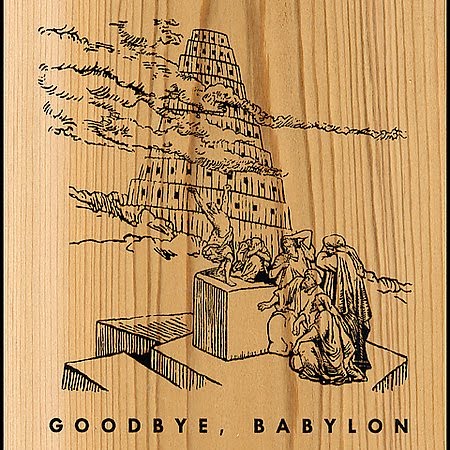
That is, unless you happen to have access to a copy of Lance Ledbetter's Goodbye, Babylon (Dust-To-Digital) six-disc compendium of vintage spirituals and sermons. Among the mammoth anthology's 135 songs are I Belong To The Band – Hallelujah! by Rev. Gary Davis, Creep Along Moses by the Taskiana Four and Found A Wonderful Savior by the Golden Gate Jubilee Quartet each of which appear in revised form on You Are Not Alone. To her credit, Staples knocks them out with such confidence and control, you'd think that she'd been singing them since childhood.
Thanks to Staples' supremely soulful voice and exceptional interpretive skill, what easily could've been a confusing hodgepodge of random Jesus-free spirituals has turned out to be an engaging showcase for an artist who, at 71, remains one of the truly great singers of our time. And while You Are Not Alone doesn't come close to Staples' finest work – for that you need to go back to the Staple Singers' Uncloudy Day and Swing Low Sweet Chariot albums for Vee-Jay along with the Stax recordings Soul Folk In Action, Staple Swingers and Be Altitude: Respect Yourself – it still makes for a more enjoyable listen than either of those two forgettable albums she did with Prince.
Wrote A Song For Everyone by Mavis Staples with Jeff Tweedy
When I saw the first notice of the Festival International de Jazz de Montréal lineup, which notably included such decidedly non-jazz acts as the Doobie Brothers, Taj Mahal, Fabulous Thunderbirds, Eric Burdon, Cyndi Lauper, Steve Miller Band, and The Moody Blues, it seemed like someone had it mixed up with the Toronto Jazz Festival2010. Checking further to see that the Gipsy Kings were listed as part at the two-week event (June 25-July 6) along with Daniel Lanois, Joan Armatrading and Lewis Furey appeared to confirm my initial suspicions but I was sadly mistaken. This was indeed the Montreal Jazz Fest listing but what happened to all the jazz?
In Montreal, where government funding flows freely for the annual outdoor soiree and the festival's astute artistic director André Ménard has a good handle on what makes for exciting jazz programming, you can usually count on a week-long showcase of an important and creatively vital artists like David Murray or Randy Weston in a variety of settings in addition to loads of respectable, if not cutting edge jazz talent – not a series of golden oldies shows by tie-dyed arena rock survivors. For some reason, this year's version of the Montreal Jazz Fest has taken a sharp turn towards the mainstream in a puzzling bid for lowest common denominator appeal. The one-off novelty of Lou Reed getting down with John Zorn and Laurie Anderson doesn't begin to make up for the Lionel Richie and Boz Scaggs head-scratchers crowding out the Sonny Rollins and David Sanchez shows. The Doobie Brothers sans Michael McDonald? Really?
There have also been some surprising moves made by the Toronto Downtown Jazz operation in advance of the Toronto Jazz Festival 2010, which will go head-to-head with the Montreal event from June 25 to July 4. While there are some holdovers at this year's festival, like the return of the Dave Brubeck Quartet, David Sanborn, Herbie Hancock (with Dave Holland and Chris Potter), Keith Jarrett (with Gary Peacock and Jack DeJohnette) as well as John Scofield, the lineup is far more solid than anticipated with The Roots, Dave Douglas, Taj Mahal, James Hunter, the Roy Hargrove Big Band, Maceo Parker, Allen Toussaint & Mavis Staples, Fred Frith, Tomasz Stanko Quartet, Martha Wainwright, Bettye Lavette, James Hunter, Stanley Clarke, Christian Scott, Hilario Duran Big Band, Angelique Kidjo, Nikki Yanofsky and Harry Connick, Jr. providing serious competition for Montreal's parade golden greats.
Perhaps the most notable change in the way the Toronto Jazz Festival 2010 is being run is the retirement of long-time artistic director Jim Galloway. Had the diehard dixieland enthusiast still been calling the shots at this year's festival, the sad passing of trombonist Rob McConnell on May 1 would've surely wreaked havoc with the bookings. Who knows, the way the schedule was padded with multiple Boss Brass gigs in previous years, the whole 10-day shebang may have been called off. Fortunately, after years of questionable booking choices, the trad-jazz focused Galloway has made way for the younger, hipper Toronto Jazz Orchestra founder/conductor Josh Grossman who understands the value of social media.
Almost immediately after Grossman took over in January, there were encouraging signs that positive changes were afoot. Just the appearance of a blog component to the torontojazz.com site was a revelation in itself but there was much more in store.
As part of a March posting, the Grossman not only acknowledged his responsibility as artistic director "to be aware of who is making waves on the Canadian and international jazz scenes, and get them playing in Toronto", he took the unprecedented step of inviting the public at large to make booking suggestions! Admittedly it's one thing to accept input and quite another to act on it. Yet the whole notion of the mysterious people at the Toronto Downtown Jazz suddenly welcoming outside suggestions and perhaps even considering what artists Toronto jazz fans really want to see is an enormously promising about face from the closed-shop approach of the past.
That's not to say the Toronto Jazz Festival will suddenly start spotlighting the sort of exciting jazz talent emerging in Canada, England, Japan, Finland, Sweden, Italy and the U.S. which has been overlooked for ages – supremely gifted jazz singer José James is appearing at Revival on July 2, not as part of the T.O. Jazz Festival – t's clearly going to take some time before we see the likes of Nat Birchall, Matt Halsall, Quasimode, Soil & Pimp Sessions, Dwight Trible, Bajka, Nostalgia 77, Build An Ark, Jukka Eskola, Five Corners Quintet, Eero Koivistoinen, Jacques Coursil or Azar Lawrence. But having an open-minded artistic director actively seeking input is a giant leap in the right direction.