Showing posts with label Habibi Funk. Show all posts

Wednesday, February 23, 2022

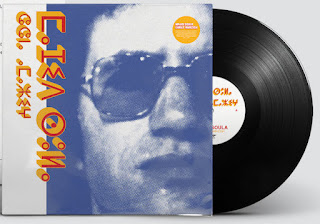
Synth-tweaked 80s recordings of Majid Soula reissued by Habibi Funk

Habibi Funk's well-chosen Majid Soula collection Chant Amazigh focuses on his discoid fusions.

Here's the scoop...

Habibi Funk is happy to present Chant Amazigh – a selection of works by Algerian-born, Amazigh artist Majid Soula. With synths, driving drums, prominent repetitive guitar lines, Majid’s music blends the best of Kabyle sounds, disco, highlife and groovy funk into something wholly unique. At the same time for Majid Soula music is a vessel for his political message. 

For Majid Soula music is more than just entertainment. He considers himself an activist through music, and foremost a “chanteur engagé”, as he says of himself: 

“I am not a politician. If I can deal with art and culture it’s already a lot. Above all, I am an artist whose first concern is to present a quality artistic work in order to contribute, however modestly, to the development and enrichment of our cultural heritage. When I fight, for example, for the defense of the Berber culture, it is not by political spirit. It is a natural act. I am against violence wherever it comes from and I do not support injustice. If the essential freedoms were granted, the Algerian artists would have no reason to take on this burden and this mission. They could, like all other artists of the world, devote their talent to making people dream. 

"I take my inspiration from the daily life of my people and I share all their aspirations, mainly the official recognition of Tamazight as a language, culture and identity.”

Majid Soula's Chant Amazigh collection is available via Bandcamp right here. Listen to a few tracks starting with the 1982 whumper "Win Tarram (L'Espoir)" featuring keyboardist Dominique Sucetti.  


Friday, July 9, 2021

One For The Weekend: Fadoul

Check out "Ahl Jebda" by Morocco's Fadoul, the lead track off a new Habibi Funk compilation due August 1. 

Here's the scoop from Habibi Funk...
This compilation of songs is not meant as a historic reflection of popular music of the “Arab world.” It is a very personal selection of songs we grew to like at Habibi Funk. It is music that historically never existed as a unified musical genre. We think it’s important to make this distinction and to have the listener understand that the majority of the music on this compilation does not come from the highly famous names of the musical spectrum of North Africa and the Middle East. Instead, the final body compiled for this record consists of some – at least for us – nichey pearls and often overlooked artists; resulting in a diverse range of styles from Egyptian organ funk, disco sounds from Morocco, an example of the lively reggae scene of Libya, political songs from Lebanon, soundtrack music from Algeria, a musical union between Kenya and Oman, and much more. 

The photo chosen for the cover could be seen as an allegory for the sounds featured on the label. It depicts Algerian composer Ahmed Malek at an ice cream bar during his stay in Japan for the World Expo in Osaka, 1970. He later said that his visit to Japan and especially the manga culture left a distinctive mark on the way he created his own compositions. With this in mind, it feels as a suiting visual representation for the music on this compilation. 

Accordingly, the compilation offers a much wider range of music than just funk influenced sounds. Sure, it brings back Fadoul, who we have already dedicated a full length album to. He was the mystical Moroccan singer – influenced by the sounds of James Brown – who created his own musical vision full of energy but also still very intimate. 

Another artist we have featured before is Ahmed Malek, the grand Algerian soundtrack composer, whose music is largely connected by a distinct feeling of melancholic beauty or Hamid Al Shaeri, the Egyptian hit producer whose track “Ayonha” was the most widely appreciated track off our first compilation. But we have also learned that the compilation format can serve as an introduction to artists who we plan to dedicate full length releases to in the near future, such as Ibrahim Hesnawi. Hesnawi is the father of reggae music in Libya – a genre still widely popular in Libya – and whose presence in the country is commonly connected to the rhythmic similarities of reggae with some form of Libyan folkloric music. Nahib Alhoush is another Libyan artist, whose musical output we will spotlight in the near future. In the 1970s, he was the co-founder of Free Music, one of the first Libyan bands introducing western influences into their music. After the band stopped performing together he started an at least equally successful solo career under his own name. 

Pre-order a copy of the 2LP compilation right here.  Check out the Fadoul whumper below. 
 

Saturday, January 2, 2021

R.I.P. Kamal Keila, 1930-2021

Sadly, Sudanese bandleader Kamal Keila has passed away. Check out Habibi Funk's release of his 1982 radio sessions right here.


Sunday, July 19, 2020

Rockin' Sudanese music of Sharhabil Ahmed reissued by Habibi Funk

The swingin' 7-track collection The King Of Sudanese Jazz collects Sharhabil Ahmed's brilliant early recordings. 

Here's the scoop...
Contemporary Sudanese music draws a lot of influences both from Arabic musical as well as subsaharan traditions. “[...]It is rooted in the madeeh (praising the Prophet Mohamed in song). The genre filled out into something quite irreverent in the 1930s and 1940s when haqiba music, the madeeh 's secular successor, caught on. Haqiba, a predominantly vocal art in which the musicians accompanying the lead singer use few instruments, spread like wildfire in the urban centres of Sudan. It was the music of weddings, family gatherings and wild impromptu parties. 

Haqiba drew inspiration from indigenous Sudanese and other African musical traditions in which backing singers clapped along rhythmically and the audience joined in both song and dance. The lead singer's incantations induced a trance-like experience in which spectators swayed along to the rhythm of the beat“ as Gamal Nkrumah wrote in a 2004 article Al Ahram Weekly newspaper. One of the first singers which Habibi Funk came across some years ago who struck a chord was Sharhabil Ahmed. Sharhabil was born in 1935 and he is the founding father of the Sudanese Jazz scene. His aim was to modernize Sudanese music by bringing it together with western influences and instrumentation like he summarized it himself in a 2004 interview for Al Ahram Weekly: 

“[...]Haqiba music, you know, was traditional vocal music with little accompaniment beyond a tambourine. When our generation came in the 1960s, we came with a new style. It was a time of worldwide revolution in music. In Europe, the rhythms of swing and tango were being replaced by jazz, samba, rock- and-roll. We were influenced by this rejuvenation in Sudan, too. I started out by learning to play the oud and traditional Sudanese music, and got a diploma from the music institute of Khartoum University. But my ambition was to develop something new. For this, the guitar seemed like the best instrument. Western instruments can approximate the scales of Sudanese music very well. After all, a lot of Western music is originally from Africa. I have absorbed different influences, from traditional Sudanese rhythms to calypso and jazz, and I hold them together in my music with no difficulty.” 

Referring to its sonic apperance, Sudanese Jazz hasn’t too much in common with the western idea of Jazz. Sharhabil’s sound feels more like a unique combination of surf, rock n roll, funk, Congolese music and East African harmonies a.o. So it kind of made sense to me, while visiting him in Sudan, to see the records he kept over the years: two of his own and two by Mulatu Astatke signed to him, further proving the influence of Ethiopian and other neighboring countries. In fact, Sharhabil was not just one of many Sudanese Jazz artist. He is the king of Jazz, literally, since in he won a competion over other artists for that title. 

Around the same time we first heard Sharhabil’s music we released a Hip Hop project on Habibi Funk’s sister label by a German producer called Pawcut and a Sudanese MC called Zen-Zin. The two had never met in person but connected over the internet and the result of the exchange was a demo we liked so much that we decided to release it. Zen-Zin was probably the first person we asked whether he knew anything about Sharhabil his answer was, “His son lives next door from me. We actually have a project together, his father and mine are old friends”. What might feel like a crazy coincidence actually turns out to be some kind of recurring serendipity. It’s only one of many stories, in which the stars align the paths in our favor and make projects possible. Be that as it may, Zen-Zin connected us with Mohamed, Sharhabil’s son, who at this point was in the process of moving to New York to pursue his own music career. 

Mohamed was interested in the idea and shared it with his dad, who was fond of looking into it. We went back and forth to share ideas and suggestions. Finding Sharhabil’s music in a quality that it could be used as source for this release was a particular though task. It was easy to find a lot of songs on the internet but all of them in very bad quality. It took us years to find good source material, with occasional hick-ups like master tapes that also did not produce a satisfying quality. 

In 2017, we visited Sudan for the first time personally and was lucky to meet Sharhabil in his house in Omdurman. Despite being in his mid 80s he’s still very active and mentally sharp with a vivid memory filled with artistic achievement from his musical work to his work as a comic artist, something he his equally known for in Sudan. The following year we featured his song “Argos Farfish” on our first compilation. And what a song it is! Driven by an an electric guitar, horns and Sharhabil’s energetic voice it’s a personal favorite on this release. Why this release is only coming out now? I really can’t tell you! But at least finally here it is. The king of jazz is holding court. 

You can order a copy of the album from Habibi Funk via Bandcamp right here. Listen to "Argos Farfesh" below. 


Saturday, May 23, 2020

Lang Lang vs. Attarazat Addahabia & Faradjallah

Lang Lang's wistful reprise of Beethoven's "Für Elise" is pretty sweet but hang on – Casablanca's Attarazat Addahabia and crew are bringing the funk. 


Wednesday, July 31, 2019

Gnawa-groove gem from Morocco's Attarazat Addahabia & Faradjallah uncovered by Habibi Funk

Listen to "Al Hadaoui" off Attarazat Addahabia & Faradjallah's unissued 1973 recording out now on Habibi Funk.