 |
| Since it's Tom T. Hall's birthday, here are a few renditions of his classic "That's How I Got To Memphis" starting with his own. |
Showing posts with label Bobby Bare. Show all posts
Showing posts with label Bobby Bare. Show all posts
Saturday, May 25, 2024
Remembering singer/songwriter Tom T. Hall


Saturday, December 24, 2022
That time John Prine and Ramblin' Jack had a chat with Bobby Bare
 |
| Watch Ramblin' Jack Elliott and John Prine talk songwriting with Bobby Bare and sing a few tunes back in 1985. |
Sunday, August 1, 2021
Happy 90th Birthday Ramblin' Jack Elliott!
 |
| Raising a glass to Ramblin' Jack Elliott with his 1985 chat with Bobby Bare and a performance with Johnny Cash. |
LINKS
Cowboy Crossroads – Episode 58: Ramblin' Jack Elliott
Friday, August 28, 2020
Bear Family readies massive Bobby Bare sings Shel Silverstein box
 |
| The mammoth Bear Family box including 137 tracks over 8 CDs along with a 128 page hardcover book is due October 2. |
Bobby Bare sings Shel Silverstein Plus
- Eight CDs with 137 tracks including 25 previously unreleased recordings.
- Bobby Bare's interpretations of more than a hundred Shel Silverstein songs.
- Classic sides from 1972 - 1983 incl. six complete albums.
- Shel Silverstein wrote hits like Sylvia’s Mother and A Boy Named Sue (made famous by Johnny Cash).
- The live album Great American Saturday Night (unreleased at the time) is expanded here with 3 tracks.
- 128-page, LP-sized hardcover book with a 2020 Hank Davis interview with Bobby Bare about his friendship with Shel Silverstein, complete lyrics transcriptions, and detailed sessions discography. It also includes a new essay by Dave Samuelson about Shel Silverstein and his multi-faceted work.

No artist recorded more Silverstein songs than veteran country singer Bobby Bare. His 1972 cover of Silverstein's bittersweet "Sylvia's Mother" launched a professional relationship that led to an enduring friendship. At Bare's request, Silverstein conceived and composed entire concept albums, starting with 'Lullabys, Legends And Lies,' an exercise in pure imagination from 1974. This two-LP set established Bare as a major album artist and yielded Marie Laveau, the first chart-topping single of the singer's long recording career. A follow-up album, 'Hard Time Hungrys,' captured the downbeat mood of American workers during the mid- '70s recession. A perceptive 'Billboard' reviewer hailed 'Hard Time Hungrys' as "something historians will look back upon." Bare's family participated in the whimsical 'Singin' In The Kitchen,' which included the tender Daddy What If.
During the late '70s, Silverstein shifted his creative focus to playwriting and children's books, but he continued crafting clever songs specifically for Bare. When Bare wound down his major-label recording career in the mid-'80s, the singer had recorded more than 100 Silverstein originals, fifteen of them on the notorious Great American Saturday Night album, recorded in 1977 but shelved when Bare left RCA for a more lucrative contract with Columbia.
Despite their lyrical and historical importance, the Bare/Silverstein collaborations have been sporadically and haphazardly reissued during the compact disc era. In response, BEAR FAMILY has put together Bobby Bare Sings Shel Silverstein Plus, the first comprehensive collection of this material. Accompanied by a 128-page hardcover book, its eight CDs include 137 tracks, 25 of them previously unissued. Six albums appear complete, including integral songs by other writers. The long-unheard 'Great American Saturday Night' includes three songs missing from a recent independent label release.
The box set contains an LP-sized, lavishly illustrated 128-page hardcover book that contains song lyrics and a discography. In a conversation with Hank Davis, Bare recalls his years working with Silverstein, and Dave Samuelson documents the songwriter's multiple creative pursuits.
Often stepping well beyond today's rigid boundaries of political correctness, many songs on Bobby Bare Sings Shel Silverstein Plus reflect an earlier era that understood and appreciated irony and satire. Besides this anthology's vivid sagas about winners, losers, and lonely all-night cafés, listeners will also discover charming children's songs and touching, affectionate love ballads, all reflecting the irreplaceable vision of Shel Silverstein.
CD 1 - Lullabys, Legends And Lies
CD 2 - Hard Time Hungrys plus
CD 3 - Singin’ In The Kitchen plus
CD 4 - Stray Bare Tracks
CD 5 - More Stray Bare Tracks
CD 6 - The Complete Great American Saturday Night
CD 7 - Down & Dirty
CD 8 - Drunk & Crazy
Wednesday, February 1, 2017
Happy Birthday Del McCoury!
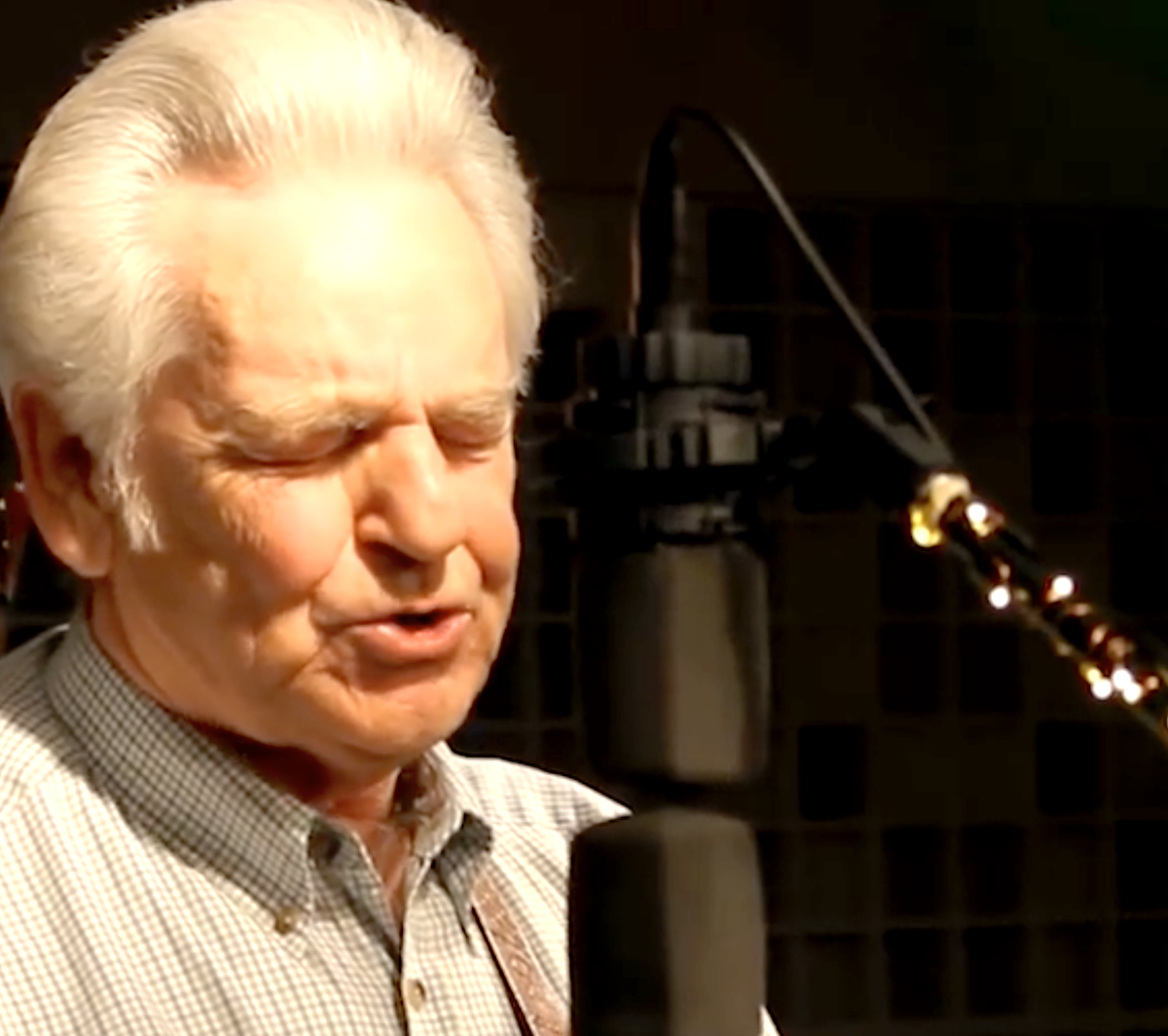 |
| Raising a glass to bluegrass great Del McCoury on his day with his version of Tompall Glaser's Streets of Baltimore. |
Saturday, March 31, 2012
Chuck Mead returns to Nashville's Quonset Hut

When former BR-549 frontman Chuck Mead decided his next solo album would be strictly old-school country, the natural choice of venue would be an old-school Nashville studio. And what better place than The Quonset Hut (aka Bradley Film & Recording Studios) – the first joint recording music in the neighborhood which eventually became known as Music Row. But Mead didn't stop there, oh no, he went a step further and reunited some of Music City's famed "A-Team" session hands, namely Harold Bradley, Hargus “Pig” Robbins, Bob Moore and Buddy Spicher to back him on a selection of twelve timeless classics. And then he invited pals Bobby Bare, Elizabeth Cook, Jamey Johnson and Old Crow Medicine Show to come along for the ride that ultimately became Back At The Quonset Hut (Ramseur Records).
 |
| Johnny Cash recording at the Quonset Hut in 1958. |
Of course, all good things come to an end and Bradley sold the Quonset Hut to Columbia Records (now a division of Sony BMG) and the acoustically unique studio closed for recording in 1982. Evidently, the Columbia/Sony brain trust decided that the hallowed ground where Patsy Cline first sang Crazy, Roger Miller recorded King Of The Road and Marty Robbins did El Paso would make for cozy office space so the historic studio was unceremoniously gutted.
"When I first saw the inside of the Quonset Hut," recalls Mead, "it was being used as the art department for Sony Records. It was 1999 and my band, the country music outfit BR5-49, had just moved over from Arista Records and we were touring our new label’s building. I remember standing in the spot where Patsy Cline sang “Crazy” amidst Dixie Chicks promo photos and album mock-ups, looking at the big old ceilings, imagining how great the sound was in there. I would never have believed that I could have the chance to find out for myself – but fate put me “Back At The Quonset Hut"
"When Sony moved out amidst the record label conglomerations of the 2000s, the Quonset Hut sat empty until Mike Curb donated funds to turn it back into a studio and a classroom, placing it in the hands of Belmont University’s music program. Students learn about recording techniques and are invited to work on sessions that are taking place."

"When it came time to figure out what my next record should be. I decided it would be a good idea to make an album of classic country songs. I called my friend, neighbor, and original BR5-49 producer Mike Janas, who is a Belmont University instructor and studio manager for RCA’s historic Studio B as well as the newly renovated Quonset Hut.
"I wanted to make the record the old way – you know, with all the musicians playing together in one room so you have to listen and react to one another. We decided it would be perfect to record my classic country record at the Hut – the quintessential Nashville studio – with Belmont students helping. I liked the idea because I could make my record the way I wanted, and Mike liked it because his young engineers could catch the vibe of the way the old-timers did things – an experience they could carry on through their own professional careers as music moguls or pizza delivery drivers.
"So I recorded the album with my band, The Grassy Knoll Boys and, as very special guests, four members of the “Nashville A Team” – studio players Harold Bradley, Hargus “Pig” Robbins, Bob Moore and Buddy Spicher who played on most all of those aforementioned classic songs. I also invited some great friends who are on the same page as me musically and cosmically to join in. Old Crow Medicine Show, Elizabeth Cook, Jamey Johnson and the legendary Bobby Bare all showed up and sang with me to create some pretty stellar moments. We also filmed it just to be able to share our killer weekend making music with everybody."
Subscribe to:
Posts (Atom)


